Tierline finds matching passages across a collection of recorded speech and returns each one with its source and the audio around it. It is built for the language programs, tribal archives and museums that keep those recordings, under the access rules they set, and it is in use in four community-governed archive pilots.
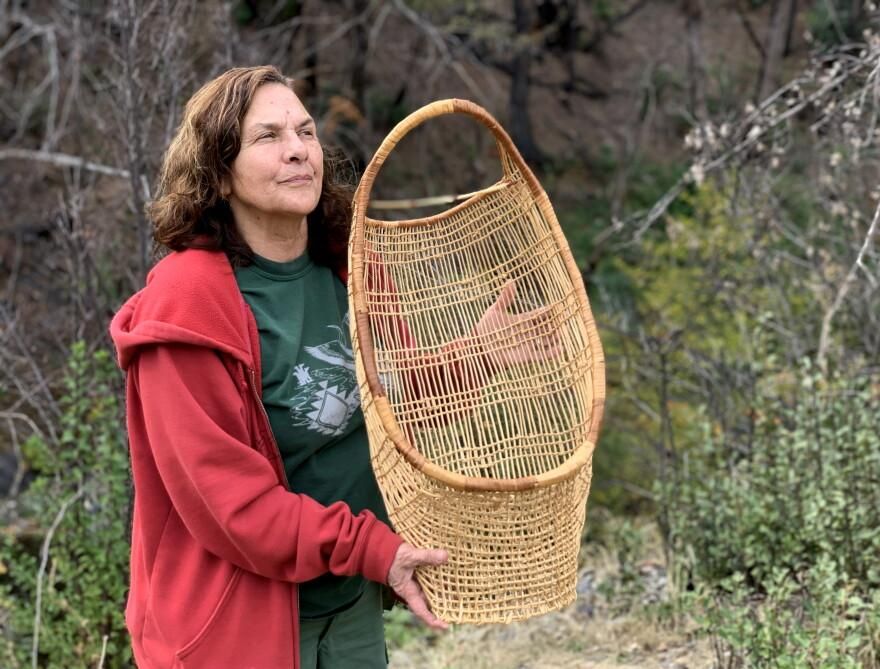
Sisters Lillian Rentz and Janet Morehead, of the Karuk Tribe, examine hazel stems harvested from a controlled burn area.Frank K. Lake, U.S. Forest ServiceSource ↗
What it does
Choose a few seconds of speech. Find every place it sounds again.
Select a passage in any recording, and Tierline compares it by sound with every recording you may search, whether or not anyone has transcribed them. Each result opens at its moment in its own recording, for a person to listen to and decide what it means.
Try it on the example recordings in your browser, or bring your own to the Workspace; nothing is uploaded. The examples are excerpts of two public-domain recordings: a 1994 U.S. Navy oral-history interview with the nurse Ann Bernatitus, and Samuel Pepys’s diary for June 1665, read by Nicole Lee for LibriVox. The pilots’ collections stay in their own systems, under agreements their stewards defined.
One search of the example recordings: the selected passage, “go by submarine”, and the closest sounds in the other recordings, each with its words, its time and its source. Try it
Why it exists
Archives keep hours of speech that no catalog can search.
A catalog can say that a collection exists. It cannot find the moment in a decades-old tape where a speaker says a word, tells a story or names a place. Today that means listening, and the listening falls to the few people who know the language well enough to do it. Transcribing everything first is no answer either: for languages with few recordings, automatic transcripts are often wrong in ways only a speaker would notice.
Tierline began with a narrow question: could modern speech models make that search faster without communities sending restricted recordings to outside AI services? The answer is a working search engine, retrieval evaluated on held-out speech, and four community-governed archive pilots in operation.
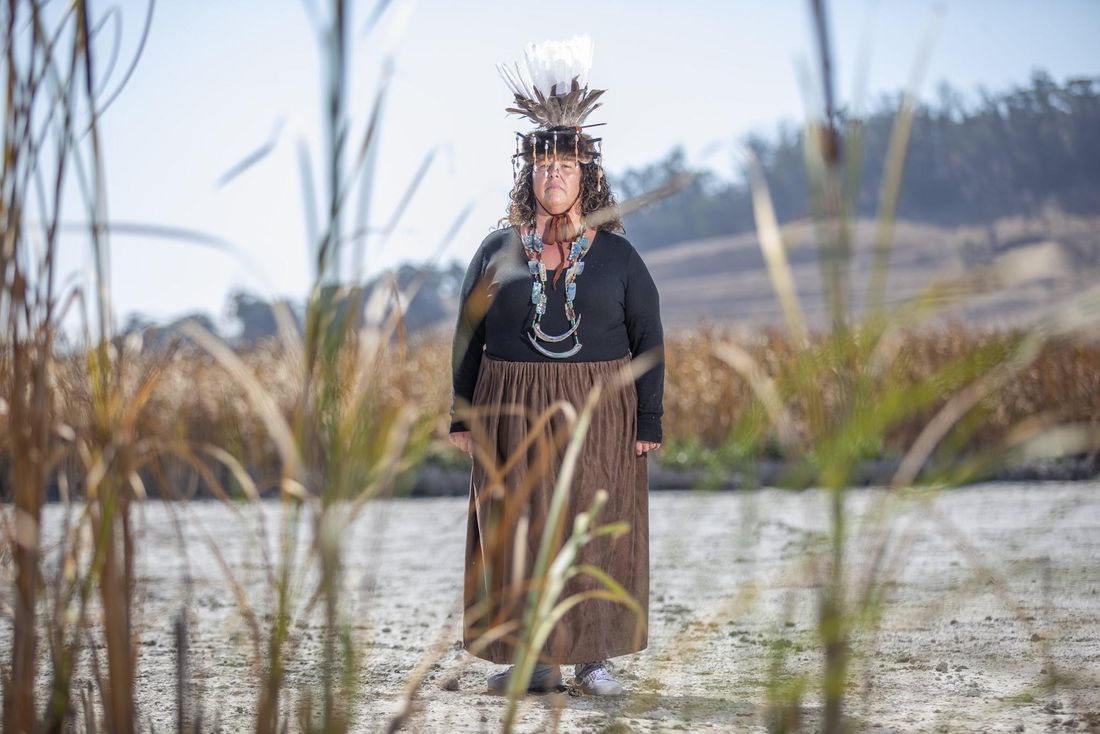
A young dancer at the second Honoring Traditions Pow Wow at Pala, August 2009.Thomas Galenbeck, CC BY-NC-ND 4.0Source ↗
What makes it different
Built around the people responsible for the recordings.
Search by sound, not by transcript
A short example of speech is the query. Tierline describes the sound with a multilingual speech model (XLS-R), finds candidates in a compressed index, and aligns each one with the example frame by frame, so untranscribed recordings are searchable.
Permissions come first
The index is divided by access policy, so a search opens only what a person may search. Search, play, annotate, export, train and publish are six separate permissions on every recording, denied unless granted.
Every result keeps its source
Results stay bound to their recording and their exact span, so a withdrawal or a revoked permission takes effect at the next search.
Runs where its stewards decide
The reference engine is built to run on the steward’s own computer and exports to ELAN and Praat. The community pilots are hosted under their own agreements: three privately hosted or local-first, one operated remotely with its institution’s approval.
Access, set per recording, and the results it allows. Try the settings
Tierline works with Indigenous communities and cultural institutions under signed agreements. In the four archive pilots, community stewards decide who may search, hear, review and export each collection; with the two co-design partners, the work is deciding what a pilot should be.
Retrieval measured on held-out speech; a comparative study of the time it takes to find a passage; access control tested against adversarial cases; and four community-governed archive pilots in operation.
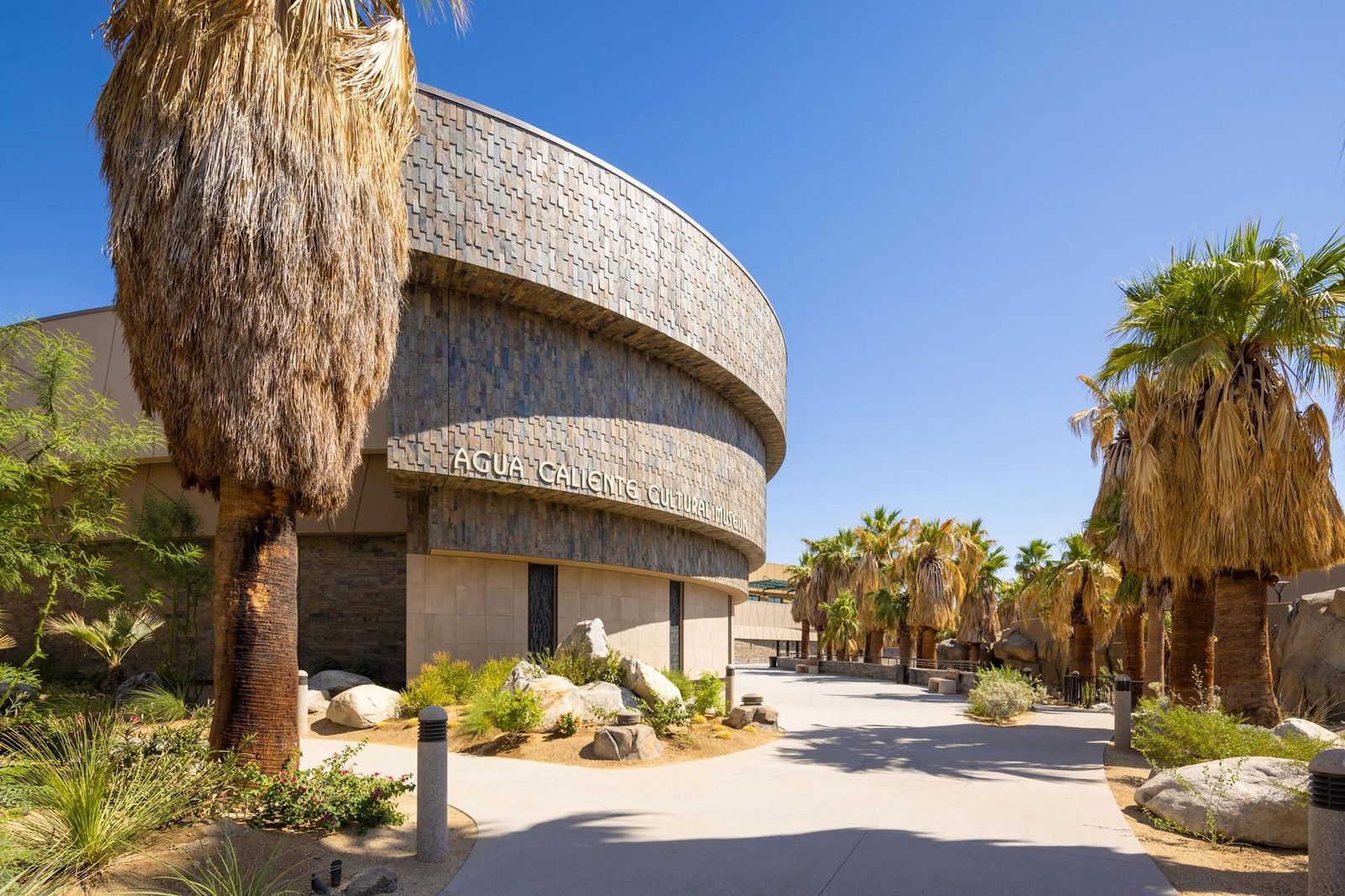
The entrance rotunda of the Agua Caliente Cultural Museum.Palm Springs LifeSource ↗
Who builds it
Twenty-one people, most of them from the communities.
Tierline was started as a public-interest technology project by a student founder, who leads its engineering with three more engineers and two research collaborators. Twelve Indigenous community stewards and reviewers shape its collections, permissions, metadata and evaluation, alongside two archival-preservation contractors and a technical evaluator who reviews the quantitative results.
Its code is licensed Apache-2.0. How Tierline is funded, and how donations and sponsorships are held, is set out on Funding & stewardship.
If you keep recordings of a language, write to us.
Tell us what you hold and which task takes the most time. A first conversation commits you to nothing. If anything on this site is wrong, or describes your work or your community wrongly, tell us and it will be corrected.