Tierline Contact

Partners & archives

Six collaborations with Indigenous communities and cultural institutions

Four are archive pilots in operation, in which community stewards decide who may search, hear, review and export each collection. Two are official partnerships in co-design. Each collaboration works under a signed agreement.

6

signed collaboration agreements

4

operating archive pilots

8

community-governed collections

2,184.1 hours

of archival audio in the pilots

Every square is one hour of archival audio in the four operating pilots (2,184.1 hours in all; each collection rounded to whole hours). Each column is a day of listening around the clock: 91 days end to end.
  • 468.4 hours Pala Band of Mission Indians
  • 836.7 hours Karuk Tribe
  • 743.6 hours Yurok Tribe
  • 135.4 hours Amah Mutsun Tribal Band
  • 312.4 hours Public playback
  • 1,411.6 hours Authenticated community access
  • 460.1 hours Steward-controlled

01 · Archive pilots

Four archives in operation

A cultural center and library, a tribal digital library and museum, a language department and a tribal band. Each pilot has a coordinator on the community’s side, and together they hold all of the audio, documents and images counted on this page.

Dancers in bright regalia process across a grass arena beside a long shade arbor, mountains and a flagpole behind; in the foreground stands a dancer in a feathered roach.
Dancers enter the arena at the Pala Powwow. Crazy Crow Trading Post Source

01Archive pilot

Pala Band of Mission Indians

Cupa Cultural Center · Pala Tribal Library

The pilot covers the historical recordings, documents and photographs of the Cupa Cultural Center and the Pala Tribal Library: preserving them, and making them searchable under rules the community sets for who may find, hear and export each item.

Pala community members founded the Cupa Cultural Center in 1974 to preserve, perpetuate and enhance traditional cultural practices.

A white adobe wall painted with the words Cupa Cultural Center arched over three oak leaves, and Mulu' Wetam (First People) beneath, beside a window in the shade of a tree.
The Cupa Cultural Center, Pala. Rethink Downtown Source
hours of archival audio
468.4
document pages
2,816
photographs and images
2,436
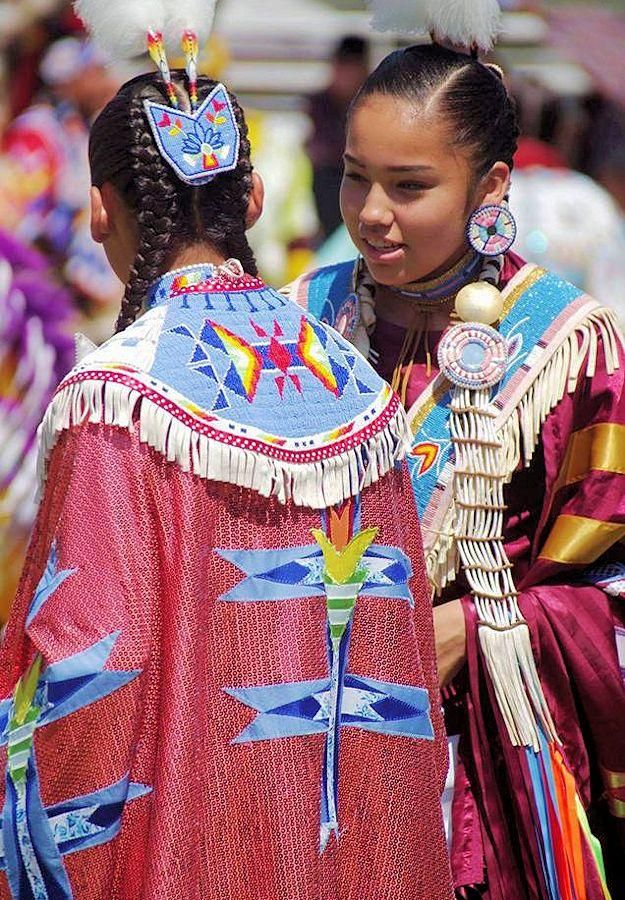
  • Two young women in beaded regalia at a powwow: one, seen from behind, wears a red cape with a beaded collar and long fringe; the other looks aside, smiling, in large beaded earrings.
    Dancers at the Pala Powwow. Crazy Crow Trading Post Source
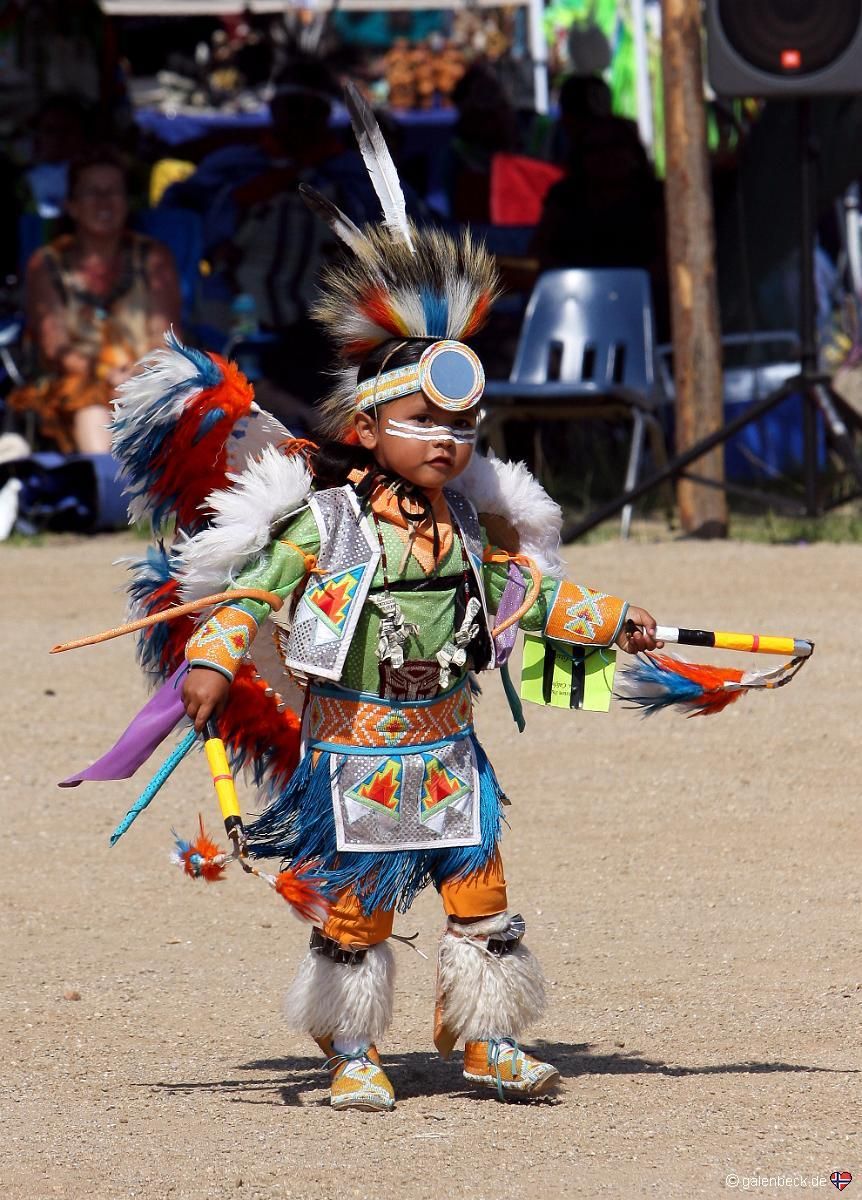
  • A small child in dance regalia, with a feathered headdress, beaded vest and feather bustle, dances across a dirt arena holding a decorated staff, spectators under shade behind.
    A young dancer at the second Honoring Traditions Pow Wow at Pala, August 2009. Thomas Galenbeck, CC BY-NC-ND 4.0 Source
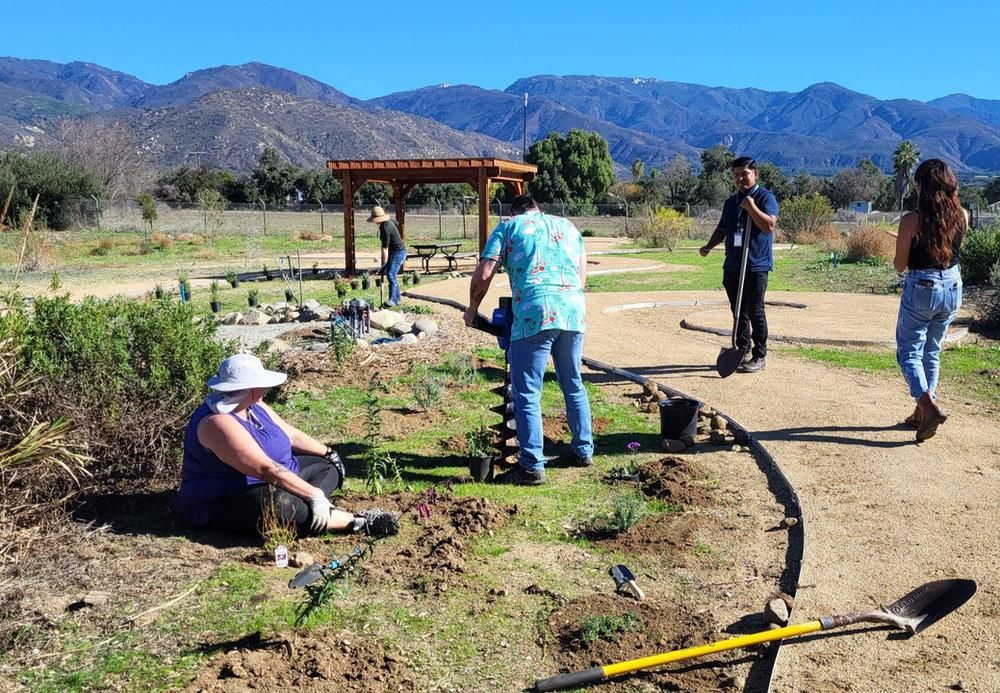
  • People plant native plants beside a curving path in a garden with a wooden shade structure, mountains under a clear blue sky behind them.
    Volunteers plant native plants at the Pala Environmental Department’s demonstration garden. CNNCTS Source
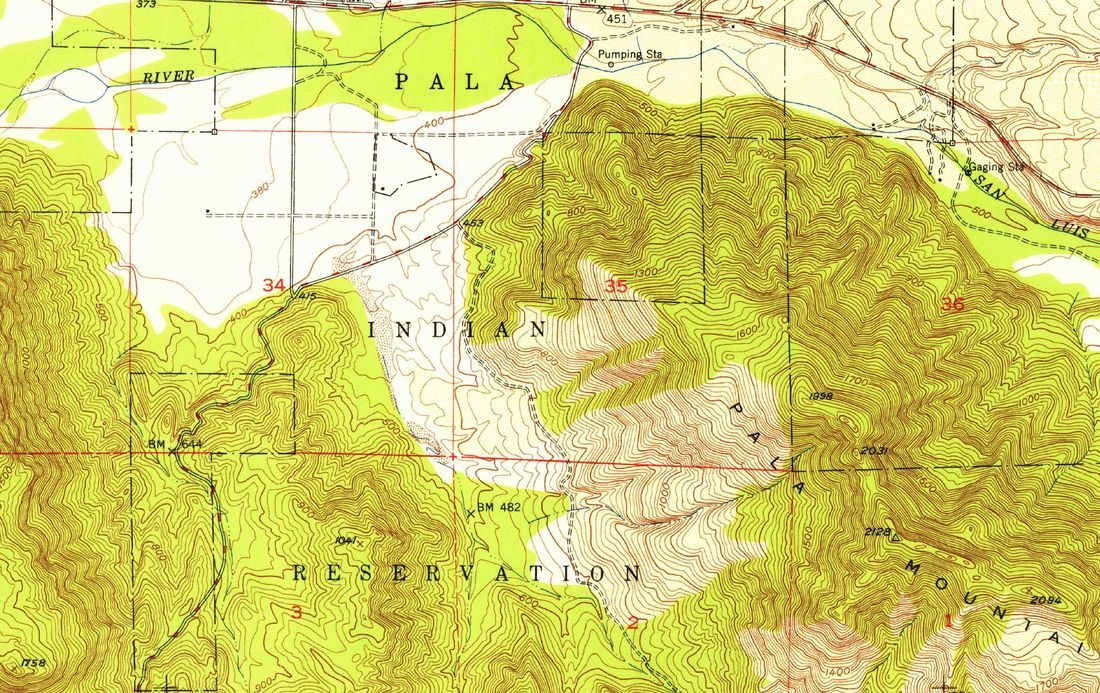
  • Detail of a 1949 topographic map: green-tinted valley floor and dense brown contour lines, lettered PALA, INDIAN and RESERVATION across the valley, PALA MOUNTAIN along a ridge, and the San Luis Rey River at the right.
    The Pala Indian Reservation, Pala Mountain and the San Luis Rey River on the U.S. Geological Survey's 1949 map of the Pala quadrangle. U.S. Geological Survey Source
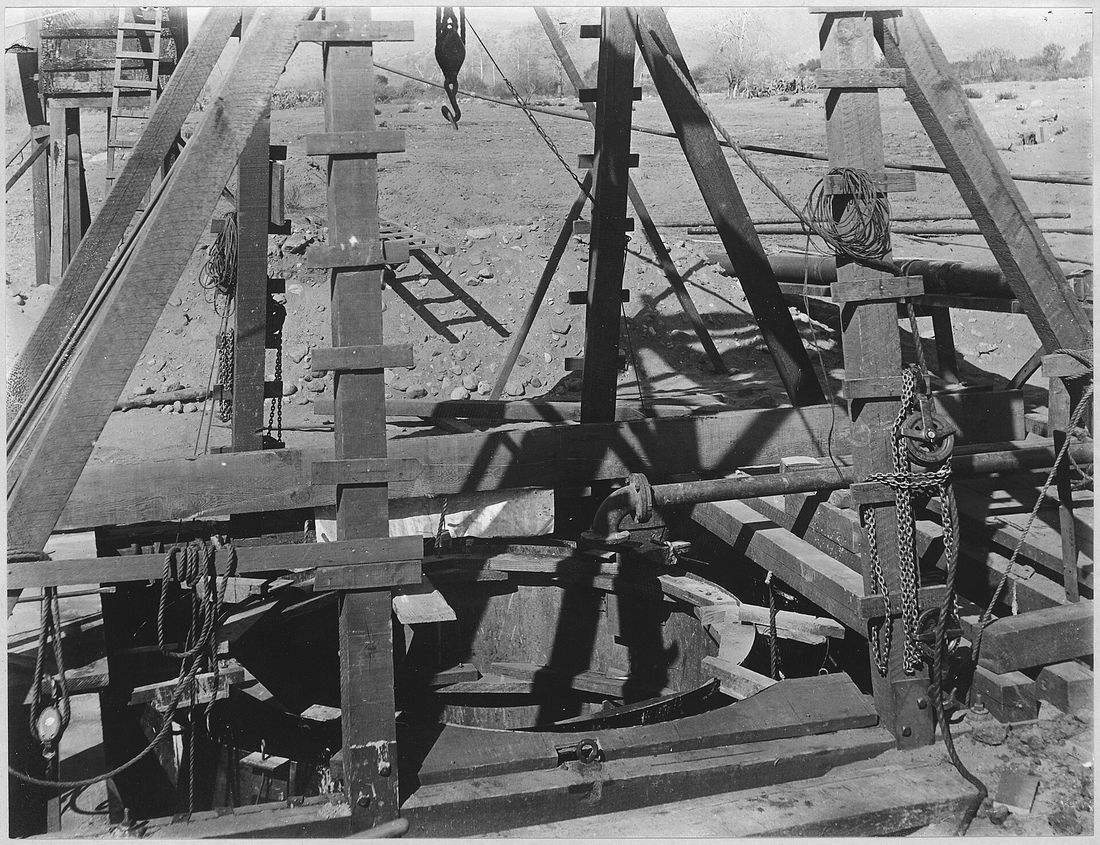
  • A timber headframe with pulleys, chains and rope over a round well casing under construction, on a flat of river cobbles with brush and low hills behind.
    A well under construction on the Pala Reservation, about 1912, photographed for a federal irrigation report. U.S. Office of Indian Affairs, National Archives Source
Kathy McCovey, in a red hooded sweatshirt, holds up a tall open-weave basket outdoors, bare branches and green shrubs behind her.
Kathy McCovey, a Karuk tribal member, with a traditional woven basket near her home, 2021. Erik Neumann, Jefferson Public Radio Source

02Archive pilot

Karuk Tribe

Sípnuuk Digital Library, Archives and Museum

Access follows the Karuk Tribe’s cultural-information protocols, which decide who may open each item.

The pilot covers Sípnuuk's historical audio, documents and images: their preservation, and the search and retrieval of material within them.

Sípnuuk is the Karuk Tribe's digital library, archives and museum. It manages and shares knowledge of Karuk history, language, traditions, natural resource management and living culture, in support of Karuk cultural responsibilities and protocols.

hours of archival audio
836.7
document pages
5,137
photographs and images
3,153
  • Wilverna Reece, a woman with white hair, sits on a porch weaving a basket, long pale strands of fiber fanning across her lap.
    Wilverna Reece weaving. She has made traditional Karuk baby baskets from hazel and other fire-dependent plants for decades. Murphy Woodhouse, Boise State Public Radio Source
  • Two women sit on the forest floor among slender young trees, looking over bundles of thin hazel stems.
    Sisters Lillian Rentz and Janet Morehead, of the Karuk Tribe, examine hazel stems harvested from a controlled burn area. Frank K. Lake, U.S. Forest Service Source
  • Kathy McCovey, in a yellow fire shirt and helmet, holding a bucket, throws acorns across a burned clearing with charred trees, a burned-out car and the remains of a building.
    Kathy McCovey tosses black-oak acorns to reseed her land in Happy Camp, California, after a wildfire destroyed her home. Kiliii Yüyan, National Geographic Source
  • A rounded lidded basket woven in dark purple-brown with bands of white zigzags and triangles and a small knob on its lid, photographed on a plain white ground.
    Basket with cover by Elizabeth Hickox (Karuk/Wiyot, 1875–1947), about 1920. National Museum of the American Indian, Smithsonian Institution. National Museum of the American Indian, Smithsonian Source
  • Morning fog lifting off a forested ridge above the Klamath River, which runs over a wide gravel bar between bare winter trees and a steep, pine-covered bank.
    The Klamath River near Happy Camp, California, on a winter morning in 2009. Matt Baun, U.S. Fish and Wildlife Service Source
Two dugout canoes with paddlers in life jackets meet on a blue river beneath a steep, densely forested bank.
Yurok guides paddle visitors along the Klamath River in canoes made from redwood trees. Robert Gauthier, Los Angeles Times Source

03Archive pilot · language preservation

Yurok Tribe

Yurok Language Department

A language-preservation pilot: the department's Yurok-language audio, documents and related historical materials, searchable and retrievable by the people the community authorizes.

The Yurok Language Department works to restore Yurok as a living, flourishing language, with speakers at every level.

743.6 hoursof archival audio: 31 days of continuous listening

Each square is an hour of audio; each column, a day.
document pages
4,806
photographs and images
2,792
  • Children and adults sit at long picnic tables under trees, working on papers, while a teacher stands beside a whiteboard on an easel.
    Yurok Language Camp at Tuley Creek, 2006. Yurok Language Project, UC Berkeley Source
  • Preschool children sit on a bright classroom rug and look up at their teacher, who holds a handwritten card with a Yurok word above the words Bald eagle.
    Mike Carlson teaches Yurok words to preschool children at the Klamath Family Head Start program. Robert Gauthier, Los Angeles Times via Getty Images Source
  • A deep round basket woven in tan and gold, with a stepped geometric band and a zigzag line below the rim, on a pale gray ground.
    A Yurok basket in the collection of the Brooklyn Museum. Brooklyn Museum Source
  • Five people paddle and pole a long wooden canoe across the calm Klamath River at sunset, forested hills behind them and golden light on the water.
    A Yurok canoe crew on the Klamath River, in a dugout redwood canoe. Visit Yurok Country Source

04Archive pilot · language and history

Amah Mutsun Tribal Band

Five people with hand tools stand and kneel around a heap of cleared brush on open ground, tall conifers and a blue sky behind.
Volunteers with the Amah Mutsun Land Trust’s Native Plant Program clear a pile of invasive bull thistle at Quiroste Valley Cultural Preserve, August 2023. Amah Mutsun Land Trust Source

The pilot supports the Band's language and history work: its recordings, documents and images, searchable under the Band's own access rules.

The Amah Mutsun Tribal Band runs an active language revitalization program.

hours of archival audio
135.4
document pages
4,623
photographs and images
1,438
A printed title page: A Vocabulary or Phrase Book of the Mutsun Language of Alta California, by the Rev. F. Felipe Arroyo de la Cuesta, of the Order of St. Francis. New York: Cramoisy Press, 1862.
The title page of Felipe Arroyo de la Cuesta's vocabulary of the Mutsun language, compiled in 1815 and printed in New York in 1862. University of California Libraries, Internet Archive Source

34 pagesof documents for every hour of audio, against about 6 in the other three pilots

  1. Pala Band of Mission Indians6.0
  2. Karuk Tribe6.1
  3. Yurok Tribe6.5
  4. Amah Mutsun Tribal Band34.1
Document pages for every hour of archival audio, in each of the four pilots.
  • About twenty people gather in front of a huge redwood trunk in a forest, some kneeling in front, most in hiking clothes and hats.
    The Amah Mutsun Land Trust’s Native Stewardship Corps among the redwoods. Amah Mutsun Land Trust Source
  • Rick Flores, in a cap, holds out a plant cutting to a group of young people in matching sweatshirts on a dirt path through coastal scrub.
    Rick Flores, director of the Amah Mutsun Relearning Program at the UC Santa Cruz Arboretum, leads Native Steward interns on an ethnobotany walk. Amah Mutsun Land Trust Source
  • Two people in yellow fire gear and hard hats stand on a green slope in the foreground while a pile of brush burns and smokes behind them.
    Alexii Sigona, of the Amah Mutsun Tribal Band, and Native Steward Esak Ordóñez help State Parks crews burn piles of Douglas fir at Quiroste Valley Cultural Preserve, April 2023. Amah Mutsun Land Trust Source
  • Six people in yellow fire shirts and green trousers stand with hand tools in front of a pickup truck, fire-scarred trees behind them.
    A crew of the Amah Mutsun Land Trust’s Cultural Burning Program. Amah Mutsun Land Trust Source
  • An aerial view of a winding dirt trail through green coastal scrub, rising to golden marine terraces that run out to the Pacific under a hazy sky.
    Marine terraces above the Pacific at Cotoni-Coast Dairies, on the north coast of Santa Cruz County. Bob Wick, Bureau of Land Management Source

01b · In co-design

Two official partnerships in co-design

With each, Tierline is designing what a pilot should be: how historical documents and museum materials are organized, preserved and found, and who decides. The figures on this page cover the four archive pilots in operation.

Sheila Guzman Schmidt, in a feathered headdress, shell necklaces, a black top and a long brown skirt, stands on dry pale ground framed by tall grasses, hills behind her.
Sheila Guzman Schmidt, a Muwekma Ohlone Tribal Councilmember, in her Tribe’s ancestral lands at Coyote Hills Regional Park, Newark, California. From Reclamation: Resilience of the Muwekma Ohlone Tribe at NUMU. New Museum Los Gatos (NUMU) Source

05Official partnership · in co-design

Muwekma Ohlone Preservation Foundation

Tierline and the foundation are at an early stage of designing how Bay Area history and heritage documents could be preserved and found, under the community's direction.

Founded in 2021, the foundation works with tribal members and allies toward the Muwekma Ohlone Tribe's goals of resilience, cultural revitalization and community building. It protects natural and cultural resources and supports education and stewardship.

  • Seen from below against a blue sky, Monica V. Arellano, in a feathered headdress hung with beaded strands, holds a floral scarf, wearing a black tribal T-shirt.
    Monica V. Arellano, Tribal Vice Chairwoman of the Muwekma Ohlone Tribal Council, 2022. From Reclamation: Resilience of the Muwekma Ohlone Tribe at NUMU. Kike Arnal, NUMU Source
  • A framed color photograph of a family of four standing in their kitchen hangs on a dark gallery wall beside a small printed label.
    A family portrait in Reclamation: Resilience of the Muwekma Ohlone Tribe at NUMU, 2022–23. New Museum Los Gatos (NUMU) Source
  • Framed color photographs of community members hang on dark gray panels in a gallery with brick walls and a concrete ceiling.
    Reclamation: Resilience of the Muwekma Ohlone Tribe, installed at NUMU, 2022–23. New Museum Los Gatos (NUMU) Source
  • A tall painted panel of swirling color stands at the entrance to a gallery, beside a dark title panel and walls of framed photographs.
    The entrance to Reclamation: Resilience of the Muwekma Ohlone Tribe at NUMU, 2022–23. New Museum Los Gatos (NUMU) Source
The curved, textured stone wall of the Agua Caliente Cultural Museum rises behind fan palms, boulders and desert plantings under a deep blue sky.
The Agua Caliente Cultural Museum at the Agua Caliente Cultural Plaza, Palm Springs. Agua Caliente Band of Cahuilla Indians Source

06Official partnership · in co-design

Agua Caliente Band of Cahuilla Indians

Agua Caliente Cultural Museum

Tierline and the museum are designing a pilot for organizing, preserving and finding historical and archival materials in a museum setting.

The Agua Caliente Cultural Museum was founded in 1991 in downtown Palm Springs. Since 2017 it has been a department of the Agua Caliente Band of Cahuilla Indians' tribal government, governed by the Tribal Council.

  • A round lobby with a circular skylight set in a wood ceiling, a patterned terrazzo floor, and the words Agua Caliente Band of Cahuilla Indians on a wood wall.
    The entrance rotunda of the Agua Caliente Cultural Museum. Palm Springs Life Source
  • A dim museum gallery: glass cases of woven baskets and clay pots curve beneath a projected mural of a desert canyon and waterfall, beside a round shelter with a thatched roof.
    Baskets and pottery in a gallery of the Agua Caliente Cultural Museum, Palm Springs. Mat D, Google Places Source
  • In a glass case, a coiled basket tray patterned with dark birds stands on a mount beside a black-and-white photograph of a seated woman with a basket, exhibition panels behind.
    Tray with Eagles or Condors, made by Ramona Lubo (Cahuilla) in the early 1900s, beside her photograph at the Agua Caliente Cultural Museum. Palm Springs Life Source
  • A gallery of wood-framed panels hung with large black-and-white family photographs leads to a red wall titled Section 14: The Untold Story.
    Section 14: The Untold Story, at the Agua Caliente Cultural Museum, 2025. Palm Springs Life Source
  • A grove of tall California fan palms, their trunks wrapped in skirts of dead fronds, beside a dry wash below a rocky desert hillside under a clear sky.
    Fan palms along the road into the Indian Canyons, south of Palm Springs, California, in 2013. Carol M. Highsmith, Library of Congress Source

Write about an archive or community collaboration →

02 · The collections

What the four pilots hold

Beside 1,438 cataloged recordings, the pilots hold 27,201 document pages and images, cataloged separately from the audio.

1,438

individual recordings cataloged

27,201

document pages and images

186.8 hours

identified Indigenous-language audio

An attic room lined with shelves of boxed wax cylinder recordings; a person in a dark suit bends over a table holding a phonograph and recording equipment.
Robert Winslow Gordon with the wax cylinders and phonograph of the Archive of Folk Song, in an attic of the Library of Congress, about 1930. Harris & Ewing, Library of Congress Source
A man threads magnetic tape on a console of reel-to-reel recorders, copying a master tape.
Copying a master tape in the Library of Congress’s talking-book laboratory, 1969. Bruce Buzzard, Library of Congress Source

2,184.1 hours of archival audio in the four pilots, 691.4 hours of it digitized from analog media in the projects.

A man in a work apron lifts a rack of developed microfilm out of a processing tank in a tiled laboratory.
Developing microfilm at the Library of Congress, June 1942. Royden Dixon, Library of Congress Source
An attic room with long wooden tables and shelves stacked with prints and portfolios, flat-file cabinets along the wall and a single hanging lamp.
The Print Division’s first storage quarters, an attic of the Library of Congress, about 1900. L. C. Handy, Library of Congress Source

17,382 historical document pages and 9,819 photographs and images, cataloged beside the recordings.

Where the 2,184.1 hours of audio came from.
  • 691.4 hours digitized from analog media in the projects
  • 1,492.7 hours imported from already-digitized authorized collections
17,382 historical document pages, by collection.
  • 2,816 Pala Band of Mission Indians
  • 5,137 Karuk Tribe
  • 4,806 Yurok Tribe
  • 4,623 Amah Mutsun Tribal Band
9,819 photographs and images, by collection.
  • 2,436 Pala Band of Mission Indians
  • 3,153 Karuk Tribe
  • 2,792 Yurok Tribe
  • 1,438 Amah Mutsun Tribal Band

03 · Access

Who may listen

312.4 hours of the audio (14%) are approved for public playback. The rest is heard only by people a community has approved, and some only with a steward’s permission. Each of the 8 collections has its own documented permission policy.

Every hour of audio in the pilots, by who may listen to it.
14%65%21%
  • 312.4 hours approved for public playback
  • 1,411.6 hours for authenticated, community-approved people
  • 460.1 hours under more restrictive steward control

4

written deployment agreements

Each sets out ownership, permissions, hosting, retention and withdrawal.

4

deployments administered by the community

A designated community-side lead directs each collection’s workflow.

3

privately hosted or local-first

Plus 1 institution-approved deployment operated remotely.

12

community stewards and reviewers

Including 6 coordinators, one for each collaboration.

How permissions work in the software →

04 · Outcomes

What the pilots have produced

From ingest to teaching: the work has also produced 7 completed learning modules and 46 oral histories given new context through community review.

  1. Ingested2,184.1 hoursof authorized audio, 691.4 hours of it digitized from analog media
  2. Cataloged1,438recordings, beside 27,201 pages and images
  3. Cited3,647archival records, given reviewed source citations and context
  4. Linked1,926names, places, subjects and themes tied to their sources
  5. Found213hard-to-find excerpts, validated by authorized reviewers
  6. Taught94reviewed excerpts, placed in approved educational and research collections

From a recording to a result

One passage of a 1994 Navy oral history, followed through a search.

The steps of the work above, shown with a recording anyone may hear and a recorded run of Tierline’s reference engine.

  1. 1The source

    Interview with CAPT Ann Bernatitus, NC, USN, (Ret.), World War II nurse

    U.S. Navy Bureau of Medicine and Surgery, 1994

    Tape side Bernatitus 2A.flac; the excerpt runs from 1:15.0 to 1:22.5

  2. 2The context

    I would rather go by submarine, never dreaming that that was exactly what was going to happen to me.

    Machine transcription, checked against the published transcript; word times are approximate.

  3. 3The passage

    1.38 s

    1.16–2.54 s of the excerpt, 1:16.1 in the tape

  4. 4The search

    Searched as a language worker, who may play, search and annotate but not export, publish or train.

    XLS-R 300M, layer 11 → 256 dimensions, int8 → candidates from an HNSW index → subsequence DTW. 8 passages ranked in 1.4 s on 4 CPU threads.

  5. 5What it found

    1. 2“And the submarine had gotten the message.”at 3:27.3 in the same tape · 1.0 s
    2. 3“They had to go through their own minefield to get to the submarine.”at 3:22.6 in the same tape · 1.0 s
    3. 4“Well, anyway, the submarine wasn't sure if it was taking us so long to get out there that they weren't sure that it hadn't already fallen.”at 3:47.1 in the same tape · 1.1 s

    Rank 1 is the passage itself. Each result opens at its moment in its own recording, and a person listens and decides: in two of these three the highlighted words include “submarine”; in the other they do not.

From a recorded run of the reference engine with the real XLS-R weights, 13 October 2026. Run this search yourself → The listening room →